
Sourcing Event Favors at Scale: A Risk Checklist
A field-tested checklist for ordering 50–500+ event favors—covering lead times, packaging, safety compliance, and vendor scoring to avoid last-minute surprises.
Why scale turns “simple favors” into a logistics risk

Ordering a few dozen giveaways is usually forgiving. Ordering 50–500+ event favors is a different game: timelines tighten, defects multiply, and one unclear SKU can trigger substitutions that derail your theme. For event-planning teams—schools, PTOs, fundraisers, and corporate coordinators—the real enemy is uncertainty: uncertain inventory, uncertain delivery windows, and uncertain packaging durability.
At scale, the biggest failures are predictable: vendors that accept the order without confirmed stock, partial shipments that arrive on different days, or items that show up damaged because “retail packaging” wasn’t designed for bulk transit. Add in safety expectations (especially for children’s events) and you have a classic risk-management problem: reduce unknowns early, document decisions, and create fallback options.
A curated, single-category shop can reduce search time—like Duckling Depot does for themed rubber ducks—yet you still need a repeatable checklist. The goal isn’t perfection; it’s confident vendor-selection with clear assumptions, backups, and a fulfillment plan everyone can trust.
The field-tested checklist: lead times, packaging, safety, and backups
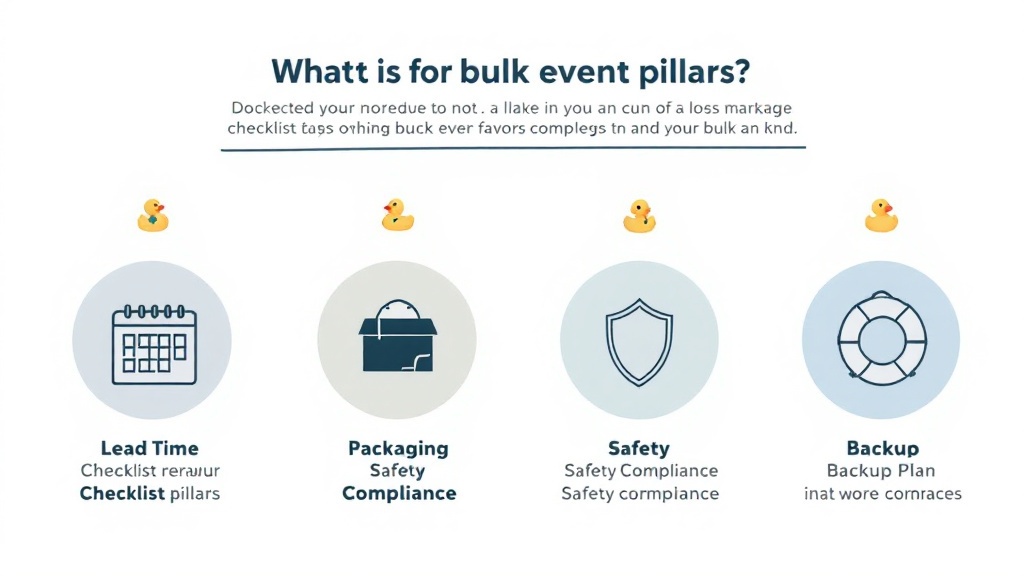
Start with lead time realism. For bulk-ordering, ask for (1) stock confirmation by SKU/variant, (2) processing time, (3) carrier transit estimates to your ZIP, and (4) a “must-arrive-by” commitment with the last safe order date. If the vendor can’t answer quickly, treat that as signal.
Next, evaluate packaging integrity and fulfillment controls. Confirm whether items ship in master cartons, whether inner packs prevent scuffing, and how fragile add-ons (tags, paint, accessories) are protected. Request photos of packed boxes and ask about damage rates and claim procedures.
Finally, cover compliance and contingency. For kids’ events, request material disclosures and any applicable safety documentation; confirm age grading and choking-hazard guidance when relevant. Lock in a backup plan:
- Pre-approved substitutions (color/theme equivalents)
- Split shipment rules (allowed or not)
- Extra buffer quantity (2–5%) for breakage
This checklist keeps event-planning decisions proactive instead of reactive.
A simple vendor scoring rubric (and what to do with the results)

To compare vendors objectively, use a 100-point rubric. Score each area 1–5, multiply by the weight, then total the points. This keeps vendor-selection from being driven by screenshots and promises.
Rubric (weights): Lead-time reliability (25), Inventory/variant accuracy (20), Packaging & damage prevention (20), Safety transparency (15), Customer support & returns (10), Price & bulk tiers (10). A vendor scoring 85+ is typically “green.” 70–84 is “yellow” (order earlier, add buffer units, or require photos before ship). Below 70 is “red” unless you have a strong backup.
Once scored, turn it into action: place orders with enough calendar buffer, document substitution rules in writing, and add a contingency SKU you’d be happy to distribute if the main item is delayed. For example, if you’re sourcing 120 themed ducks, confirm variant counts, carton protection, and return/exchange handling before checkout. That’s practical risk-management—and it’s how bulk favors arrive on time, intact, and on-theme.